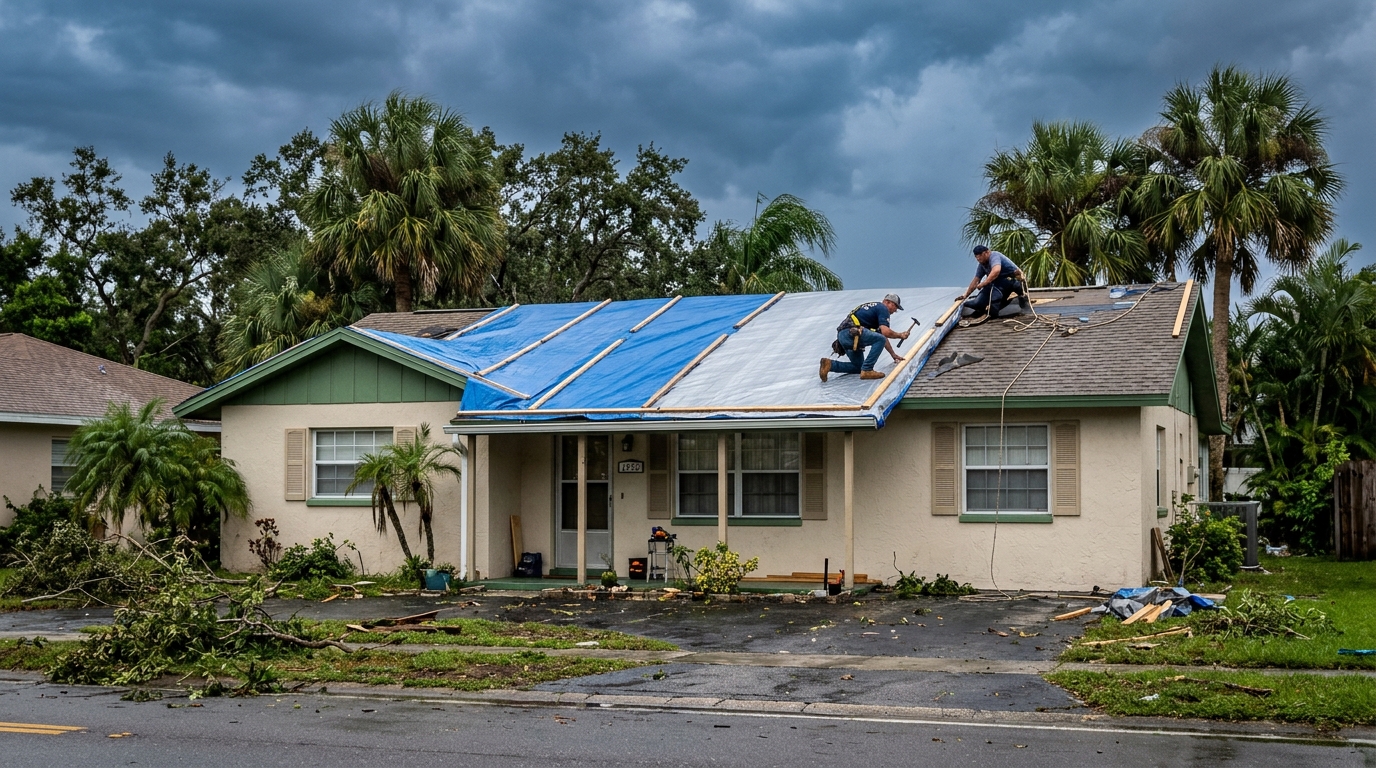
1. Local Meteorological Hazards & Storm Impact Analysis in Ballwin, MO
Residential roofing systems across Ballwin, MO endure some of the most concentrated severe weather patterns in the Midwest. Positioned in the path of spring supercell thunderstorm clusters moving across the Missouri River Basin, properties face severe updrafts that spawn damaging hail measuring 1.5 to 2.5 inches in diameter. When these severe squalls intersect suburban terrain, wind speeds reaching 75 mph create severe aerodynamic pressure differences between roof slopes, tearing windward shingle edges and creating massive uplift that snaps brittle fiberglass reinforcement mats.
In winter, prolonged sub-freezing temperatures interlocked with heavy snowfall produce chronic ice damming. Snow melting from warm attic heat loss migrates downward toward unheated eaves and gutters, where it freezes into thick ice ridges. Trapped meltwater backs up under roofing shingles, infiltrating the structural decking and soaking finished ceilings below. In Ballwin, MO, where many residences feature complex rooflines with multiple dormers, hips, and valleys, ice dams accumulate rapidly in shaded convergent drainage corridors.
Primary Roofing Vulnerabilities in Ballwin, MO
- Convective Hail Bruising: High-energy hail impacts fracturing fiberglass shingle scrims and puncturing metal flashing seams.
- Tree Canopy Fall Risk: Heavy hardwood branches snapping under derecho winds and piercing structural OSB roof decks.
- Winter Eave Ice Damming: Hydrostatic meltwater backup penetrating unsealed eaves and soaking blown-in attic insulation.
- Thermal Cycling Mortar Degradation: 40°F daily temperature fluctuations loosening brick chimney counter-flashing reglets.
2. High-Precision FLIR Thermal Imaging & Moisture Tracing
Tracing an active water leak to its precise exterior origin on Ballwin, MO homes requires advanced scientific instrumentation. Water entering through a compromised valley or fractured ridge vent often migrates along sloped rafters, ceiling joists, and electrical wire runs before accumulating at drywall seams or recessed lighting fixtures. Dispatching contractors without proper diagnostic equipment leads to blind guessing and cosmetic caulking that fails on the very next rainfall.
Contractors connected through our emergency network utilize calibrated FLIR infrared thermal imaging cameras to track evaporative cooling signatures across ceiling substrates and attic framing. Wet insulation and soaked timber retain heat differently than dry substrates, producing clear thermographic boundaries that reveal the true extent of water intrusion. These findings are validated using non-invasive impedance radio-frequency moisture meters, verifying saturation levels without puncturing plaster, drywall, or vapor barriers.
Diagnostic Verification Protocol in Ballwin, MO
- FLIR Thermal Infrared Scanning: Non-destructively reveals hidden wet insulation pockets within cathedral ceilings and attics.
- Dielectric Impedance Moisture Mapping: Measures deep moisture percentage gradients across OSB sheathing and timber rafters.
- Forensic 10x10 Rooftop Test Squares: Quantifies hail strike density and granule spallation per 100 sq ft directional exposure.
- High-Resolution Digital Scopes: Captures detailed micro-crack imagery of flashing reglets and chimney crowns for adjuster review.
3. Step-by-Step Substrate Restoration & Stabilization Workflow
Emergency field crews arriving at your Ballwin, MO residence implement a systematic, engineering-based remediation protocol designed to halt progressive interior degradation and prepare your property for permanent restoration:
- Interior Water Extraction & Hazard Containment: Relieving trapped ceiling water using surgical needle punctures, deploying heavy-duty catch funnels, and isolating live electrical fixtures.
- Storm Debris Removal & Safety Rigging: Setting OSHA-compliant rooftop anchor points, removing broken tree limbs, and clearing backed-up drainage valleys.
- Damaged Material Demolition: Carefully extracting bruised shingles, cracked slate tiles, or rusted metal valley troughs down to bare decking without disturbing sound adjoining materials.
- Substrate Sheathing Reinforcement: Inspecting underlying plywood or tongue-and-groove decking for water delamination and replacing rotted sections with exterior-grade CDX plywood.
- Application of Self-Adhering Polymer Membranes: Installing high-temp rubberized asphalt ice-and-water barrier directly over bare wood sheathing for watertight seal protection.
- Precision Material Weaving: Installing matching architectural laminated shingles, slate tiles, or 26-gauge galvanized flashings with corrosion-resistant hot-dipped fasteners.
4. Missouri & St. Louis County Code Compliance Standards
All repair and re-roofing operations performed in Ballwin, MO must strictly comply with St. Louis County building codes and the International Residential Code (IRC). Key engineering standards enforced by our network contractors include:
- Mandatory Eave Ice Protection (IRC R905.1.2): Polymer-modified bitumen underlayment must extend from the eave edge to at least 24 inches inside the warm interior wall plane.
- Enhanced High-Wind Fastener Schedule: Fastening shingles with six corrosion-resistant roofing nails per strip to resist high-velocity storm gusts up to 110 mph.
- Balanced Attic Ventilation Dynamics (IRC R806): Providing 1:150 or balanced 1:300 continuous soffit intake and ridge exhaust ventilation to prevent moisture accumulation and wood rot.
- Contractor Licensing & Insurance Verification: Ensuring field contractors carry full general liability, active workers' compensation insurance, and OSHA safety certifications.
5. Preventative Property Maintenance & Severe Weather Preparedness
Proactive maintenance protects your Ballwin, MO home against devastating water infiltration during seasonal Missouri storm events. Implementing an ongoing maintenance regimen prevents costly structural repairs:
Check shingle surfaces for impact spallation, lifted tabs, and dislodged ridge caps following severe spring weather fronts.
Trim large oak, hickory, and maple branches back a minimum of 10 feet from rooflines to eliminate puncture hazards during summer storms.
Inspect chimney mortar joints, valley seams, and neoprene pipe boot gaskets before freezing temperatures cause thermal expansion splits.
Need Immediate Emergency Roofing Dispatch in Ballwin, MO?
Our dispatch team is standing by 24 hours a day to connect you with experienced, licensed roofing professionals ready for rapid on-site emergency triage.
DISPATCH TO Ballwin, MO: (888) 208-4155 CALL NOW: (888) 208-4155